
Is Delta strict in baggage allowance?
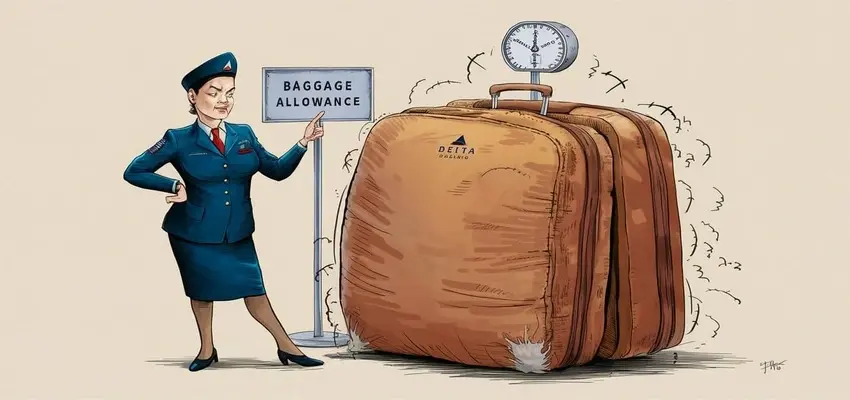
Navigating the complexities of airline baggage policies can often feel like a daunting task, especially when planning a trip with a major carrier like Delta Airlines. Many travelers find themselves wondering, "Is Delta strict in baggage allowance?" This question is paramount for ensuring a smooth travel experience, avoiding unexpected fees, and packing efficiently. Understanding Delta's specific rules for carry-on and checked baggage is crucial for both domestic and international journeys.
This comprehensive guide delves deep into Delta Airlines' baggage policies, offering clear, actionable advice for 2025-26. We aim to demystify their regulations, providing insights into dimensions, weight limits, and the nuances of different fare types and cabin classes. By the end of this article, you will be well-equipped to pack with confidence and avoid any last-minute surprises at the airport, ensuring your journey with Delta is as seamless as possible.
Delta Baggage Allowance Overview
Delta Airlines generally adheres to industry standards for baggage allowance, but their specific policies can be quite detailed, leading to the common question: "Is Delta strict in baggage allowance?" While not excessively punitive, Delta enforces its rules consistently, particularly concerning carry-on size and checked baggage weight. Travelers who familiarize themselves with these guidelines before their flight are far less likely to encounter issues.
The airline's approach aims to balance passenger convenience with operational efficiency, ensuring that aircraft can be loaded safely and on time. Understanding the distinction between Main Cabin, Comfort+, Delta One, and First Class allowances is fundamental to avoiding surprises. Delta's website provides an exhaustive breakdown, but this guide synthesizes the most critical information for practical application.
For most domestic flights, Delta permits one carry-on bag and one personal item per passenger, with specific dimensions enforced. Checked baggage policies vary based on the destination, fare type, and frequent flyer status, making a one-size-fits-all answer challenging. However, by knowing the general framework and where to find specifics for your particular itinerary, you can pack with assurance.
Carry-On Baggage Rules
Delta Airlines' carry-on baggage policy is designed to ensure that bags fit securely in overhead bins or under the seat in front of you. The maximum dimensions for a carry-on bag are 22 inches long, 14 inches wide, and 9 inches high (56 cm x 35 cm x 23 cm), including handles and wheels. This measurement is strictly enforced, and bags exceeding these dimensions may be required to be checked.
In addition to the main carry-on, passengers are allowed one personal item, such as a purse, laptop bag, or small backpack. This personal item must fit under the seat in front of you and should not exceed 18 inches x 11 inches x 7 inches (45 cm x 28 cm x 20 cm). The intent is to allow passengers to bring essential items like medication, documents, and small electronics within easy reach.
The weight of the carry-on bag is not explicitly stated as a strict limit by Delta for most domestic flights, but it must be manageable for passengers to lift and stow independently. For international flights originating from or traveling to certain regions, weight restrictions may apply, so it is always prudent to check Delta's specific international carry-on guidelines. This dual allowance of a carry-on and a personal item provides a reasonable amount of storage for shorter trips.
Personal Item Guidelines
Your personal item serves as a convenient place for items you'll need during the flight. This could include a tablet, a book, snacks, or a small jacket. Delta expects this item to fit comfortably beneath the seat, ensuring it doesn't obstruct legroom or aisle access for other passengers. The 18" x 11" x 7" dimension is a general guideline, and common sense dictates that it should be a relatively compact item.
Many travelers successfully use a standard backpack, a large tote bag, or a camera bag as their personal item. The key is its ability to slide easily under the seat without forcing you to compromise your legroom. It's important to remember that Delta's agents at the gate are empowered to enforce these rules, so packing your personal item thoughtfully can prevent last-minute gate-checking.
While Delta doesn't typically weigh personal items, they must be proportionate to the passenger and the aircraft's cabin capacity. Overstuffing a personal item to the point where it resembles a second carry-on is likely to draw attention and may result in it being gate-checked. Therefore, prioritize essential items for your personal bag.
Carry-On Size Enforcement
Delta's commitment to efficient boarding and cabin space means their carry-on size restrictions are actively monitored. While not every bag is measured, Delta uses sizers at check-in and gate areas, and agents are trained to identify oversized bags. If your carry-on exceeds the 22" x 14" x 9" dimensions, it will likely be tagged and checked as baggage, incurring applicable fees.
These enforcement measures are in place to prevent issues like overstuffed overhead bins, which can delay departures. The airline aims for a consistent experience for all passengers, ensuring that everyone has a fair opportunity to store their carry-on luggage. Travelers should measure their bags at home before heading to the airport to confirm compliance.
For those who frequently fly Delta, investing in a carry-on bag that is specifically designed to meet these dimensions can be a wise decision. Many luggage manufacturers clearly label their carry-on sizes, making it easier to select compliant options. Being proactive about your carry-on size is the most effective way to avoid any surprises at the gate.
Checked Baggage Allowance
Delta's checked baggage allowance is where the policy becomes more variable, depending significantly on your fare type, cabin class, and destination. For Main Cabin on most domestic flights within the U.S. and between the U.S. and Canada, the first checked bag typically incurs a fee, with the second bag costing more. These fees are subject to change, so checking Delta's website for your specific route is essential.
The standard weight limit for checked bags on Delta flights is generally 50 pounds (23 kg) for Main Cabin and Comfort+ passengers, and 70 pounds (32 kg) for Delta One and First Class passengers. Exceeding this weight limit will result in overweight baggage fees, which can be substantial. Dimensions for checked bags are also regulated, usually capped at 62 linear inches (length + width + height).
Understanding these parameters is crucial for avoiding unexpected charges. For instance, if you are flying domestically on a Basic Economy fare, you will generally be charged for your first checked bag. However, if you are flying internationally to many regions, Delta may offer one or even two free checked bags as part of the fare.
Weight and Dimension Limits
The standard weight limit for checked baggage on Delta flights is 50 pounds (23 kg) for Main Cabin and Comfort+ passengers. For those traveling in Delta One or First Class, this limit is extended to 70 pounds (32 kg). This distinction is important for passengers who may need to pack heavier items or are traveling for extended periods.
Beyond weight, the total linear dimensions of each checked bag must not exceed 62 inches (157 cm). This measurement is calculated by adding the length, width, and height of the bag. Bags exceeding these dimensions are considered oversized and will incur additional fees, which can be quite significant and are often higher than standard checked baggage fees.
It is vital to verify these limits for your specific itinerary, as exceptions can occur for certain routes or with specific fare types. Using a tape measure at home to confirm your bag's dimensions and a luggage scale to check its weight can save you considerable expense and stress at the airport. Delta's website offers a detailed fee calculator for checked baggage based on your origin and destination.
Impact of Fare Type on Allowance
The fare type you select for your Delta flight significantly influences your checked baggage allowance. Basic Economy fares, for example, typically come with the most restrictive baggage policies, often requiring payment for the first checked bag and disallowing carry-ons for flights within North America. This fare is designed for the most budget-conscious traveler, with baggage costs factored in.
Standard Main Cabin fares offer a more typical allowance, though fees for the first and second checked bags are common on domestic routes. For international travel, however, Delta often includes one or two checked bags free of charge, depending on the destination and cabin class. This is a key differentiator for international travelers seeking value.
Conversely, premium cabins like Delta One and First Class provide a more generous allowance, usually including two checked bags with higher weight limits and no additional charge. This reflects the premium service associated with these higher fare classes. Always review the specific baggage allowance associated with your purchased fare before packing.
Understanding Delta Baggage Fees
Delta Airlines baggage fees are a critical component of their pricing structure, and understanding them is key to avoiding unexpected costs. For domestic flights within the U.S. and between the U.S. and Canada, the first checked bag generally costs between $30-$35, and the second checked bag typically ranges from $40-$45. These prices are subject to change and can vary slightly by route.
Fees for overweight or oversized bags are considerably higher. An overweight bag (51-70 lbs or 23-32 kg for Main Cabin) will incur an additional fee of $100-$200, while bags exceeding 70 lbs (32 kg) may be denied or subject to even steeper charges. Similarly, oversized bags (beyond 62 linear inches) can add $200 or more to your travel costs.
It's important to note that these fees apply per person, per direction, and are paid at the airport or online during check-in. For international travel, the fee structure can differ dramatically, with many routes including free checked baggage allowances. Always consult Delta's official baggage fee calculator for the most accurate and up-to-date information for your specific flight.
Domestic vs. International Fees
The distinction between domestic and international baggage fees is one of the most significant factors to consider. Domestically within the United States and to Canada, Delta generally charges for checked bags, with the first bag costing around $30-$35 and the second around $40-$45. This applies to most Main Cabin fares, with Basic Economy often being even more restrictive.
Conversely, many international routes operated by Delta include at least one, and often two, checked bags in the ticket price. This is a common practice for long-haul international travel to make the fare more competitive and inclusive. However, the exact number of included bags and their weight limits can vary by destination, so verification is crucial.
For example, flights to Europe, Asia, or South America often come with a more generous checked baggage allowance than a short hop within the U.S. Travelers should always check the specific allowance for their route on Delta's website, as exceptions exist and policies can be updated. This difference can significantly impact packing strategy and overall travel cost.
Overweight and Oversized Bag Penalties
Delta's penalties for overweight and oversized checked baggage are designed to be deterrents, and they can add up quickly. For bags weighing between 51 and 70 pounds (23-32 kg) in Main Cabin or Comfort+, an overweight fee of approximately $100-$200 is typically applied. This fee is in addition to any standard checked bag fees.
Bags exceeding 70 pounds (32 kg) are often not accepted as checked baggage at all, or they may be subject to a significantly higher fee, potentially reaching $200-$400 or more, and are still subject to size restrictions. Similarly, bags with total linear dimensions (length + width + height) exceeding 62 inches (157 cm) but not exceeding 80 inches (203 cm) will incur an oversized fee, usually around $200.
Bags that exceed both the weight and dimension limits will be subject to the higher of the two fees. It is imperative to accurately weigh and measure your bags before arriving at the airport to avoid these substantial charges. Delta's strict enforcement here is a common area where travelers incur unexpected costs.
Baggage Allowance by Cabin Class
Delta Airlines distinguishes baggage allowances based on the cabin class you book, offering greater flexibility and higher limits for premium travelers. In Main Cabin and Comfort+, passengers typically receive one carry-on and one personal item for free, with checked baggage fees applying to domestic routes as previously discussed. The weight limit for checked bags in these classes is generally 50 pounds (23 kg).
Moving up to First Class or Delta One, the benefits increase significantly. Passengers in these cabins usually receive two checked bags with no additional charge, and the weight limit is increased to 70 pounds (32 kg) per bag. This enhanced allowance is part of the premium experience, allowing for more comfort and convenience during longer journeys.
The carry-on allowance remains consistent across most cabin classes, with one carry-on bag and one personal item permitted. However, the checked baggage policies are a key differentiator, reflecting the value proposition of each cabin. Always confirm the specific allowance for your booking, as international routes and specific fare rules can introduce variations.
Main Cabin and Comfort+ Allowance
For passengers flying in Delta's Main Cabin and Comfort+, the carry-on allowance is standard: one carry-on bag and one personal item are permitted per person. These items must adhere to the specified dimensions of 22" x 14" x 9" for the carry-on and 18" x 11" x 7" for the personal item. The weight of the carry-on is not strictly enforced on most domestic flights, but it must be manageable for the passenger to stow.
Checked baggage policies for Main Cabin and Comfort+ vary by route. On domestic U.S. flights, the first checked bag typically incurs a fee, and the second bag costs more. The weight limit for these checked bags is generally 50 pounds (23 kg). Exceeding this weight will result in overweight baggage fees.
For many international routes, Delta includes one or two checked bags free of charge for Main Cabin and Comfort+ passengers, depending on the destination. This makes international travel more cost-effective in terms of baggage. It is crucial for travelers to check Delta's website for the specific baggage allowance applicable to their flight's origin and destination.
First Class and Delta One Allowance
First Class and Delta One passengers enjoy a more generous baggage allowance, reflecting the premium nature of these cabins. Typically, these passengers are permitted two checked bags at no additional cost on most domestic and international routes. This significantly reduces the financial burden associated with checked luggage for premium travelers.
Furthermore, the weight limit for checked bags in First Class and Delta One is generally higher, set at 70 pounds (32 kg) per bag. This allows for more flexibility in packing, accommodating larger items or a greater volume of belongings. This increased allowance is a key perk of booking these elevated travel experiences.
The carry-on allowance remains the same as in Main Cabin: one carry-on bag and one personal item. However, the substantial increase in checked baggage allowance, both in number and weight, is a significant advantage for those flying in Delta's premium cabins. It underscores Delta's commitment to providing a seamless and comfortable travel experience for all its passengers, with enhanced benefits for those in higher fare classes.
Traveling with Special Items
Delta Airlines has specific policies for transporting special items, which can include musical instruments, sporting equipment, and pets. These items often have unique size, weight, and packing requirements, and may incur additional fees or require advance notice. For musical instruments that fit within carry-on dimensions, they are generally accepted as a carry-on bag, provided there is space in the cabin.
Larger instruments or sporting equipment, such as skis, golf clubs, or surfboards, must be checked as baggage. These items typically fall under special baggage rules and may be subject to oversized and overweight fees, in addition to standard checked baggage fees. It is always advisable to check Delta's website for the specific regulations regarding your particular item.
Traveling with pets on Delta also involves strict guidelines. Small dogs and cats can travel in the cabin on certain routes if they fit in a carrier that slides under the seat, with specific dimensions and fees applying. Larger pets must be transported as cargo, which has its own set of regulations and booking procedures. Advance reservations are often required for all special items, especially pets.
Musical Instruments
Musical instruments can be transported on Delta flights either as carry-on or checked baggage, depending on their size and the passenger's cabin class. Small instruments like a violin or flute that meet carry-on size and weight restrictions can be brought into the cabin and stored in the overhead bin or under the seat. This is often the preferred method to ensure the instrument's safety.
For larger instruments, such as guitars or cellos, Delta offers the option to purchase an additional seat for the instrument, provided it meets certain size and safety requirements. Alternatively, these instruments can be checked as baggage, but they must be properly packed in a hard-shell case to protect them from damage. Standard checked baggage fees and weight limits apply, though some exceptions may exist for instruments.
It is essential to notify Delta in advance if you plan to travel with a musical instrument, especially a larger one or if you intend to purchase an extra seat. This allows the airline to make the necessary arrangements and inform you of any specific requirements or potential fees. Proper packing is paramount to prevent damage during transit.
Sporting Equipment
Delta Airlines accommodates various types of sporting equipment, treating them as checked baggage with specific guidelines. Items like skis, snowboards, golf clubs, and fishing gear are generally accepted, provided they are properly packaged. For instance, skis and snowboards should be placed in a ski bag, and golf clubs in a golf travel bag.
These items are often subject to standard checked baggage fees, but they may also incur oversized fees if their combined dimensions exceed 62 linear inches. For example, a golf bag and clubs combination might exceed this limit. Weight limits also apply, typically 50 pounds for Main Cabin and 70 pounds for premium cabins.
Delta's policy allows for one set of sporting equipment to count as a single checked bag, provided it meets the weight and dimension restrictions. However, if multiple pieces of equipment are packed together or if the total weight exceeds the limit, additional fees will apply. Travelers should always check Delta's website for the most current policies on specific sports equipment before their flight.
Pets and Service Animals
Delta has distinct policies for pets and service animals. For pets traveling in the cabin, they must be small enough to fit in a carrier that can be placed under the seat in front of the passenger, with dimensions typically around 18" x 11" x 7". A fee applies for in-cabin pet travel, and reservations are required, as there's a limit on the number of pets per flight.
Service animals, trained to assist individuals with disabilities, are permitted to travel in the cabin with their handlers at no additional charge. Delta requires documentation for service animals, including a completed form outlining the animal's training and the passenger's need for it. This policy aims to accommodate passengers with disabilities while ensuring safety and comfort for all.
For pets that cannot travel in the cabin, Delta Cargo offers a pet transportation service. This service has its own set of regulations regarding breed, temperature restrictions, and carrier requirements. It's crucial to review Delta Cargo's specific guidelines and make arrangements well in advance, as availability can be limited.
Tips for Avoiding Excess Baggage Fees
Avoiding excess baggage fees on Delta Airlines requires careful planning and strategic packing. The most straightforward method is to adhere strictly to the carry-on baggage dimensions and to pack only what you truly need in your checked luggage. Utilizing packing cubes and rolling clothes can maximize space within your allowed bags, preventing the need for an extra bag.
Consider the fare class you book, as premium cabins and certain international routes often include checked baggage at no extra cost. If you are a frequent Delta flyer, achieving elite status with SkyMiles can also grant you free checked baggage privileges, even on domestic flights where fees would otherwise apply. Always check your SkyMiles status benefits before booking.
Another effective strategy is to weigh your bags at home using a luggage scale to ensure they don't exceed the 50-pound limit for Main Cabin. If a bag is close to the limit, consider moving heavier items to another bag or wearing bulkier clothing during travel. For items like electronics or valuables, consider carrying them on rather than checking them, which also saves on potential checked baggage fees.
Strategic Packing
Maximizing the space within your allowed carry-on and checked bags is paramount to avoiding excess fees. Techniques like rolling your clothes instead of folding them can significantly reduce wrinkles and save space, allowing you to fit more items. Utilizing packing cubes further organizes your belongings and compresses them, making efficient use of every inch.
For items that are bulky but lightweight, such as jackets or sweaters, consider wearing them during your flight rather than packing them. This frees up valuable space in your luggage and ensures you have them readily available during your journey. Think critically about what you will actually need during your trip to avoid packing unnecessary items.
If you are traveling with a companion, coordinate your packing to share items like toiletries or chargers. This can help reduce the number of bags you need to check. By being mindful of space and necessity, you can pack effectively within the provided allowances, thereby sidestepping potential fees.
Leveraging Fare Classes
The fare class you select can dramatically influence your baggage allowance and associated costs. Basic Economy fares, while often the cheapest upfront, typically come with the most restrictive baggage policies, usually charging for the first checked bag and sometimes disallowing carry-ons on domestic routes. This means the advertised low price doesn't always reflect the total cost if you need to check luggage.
Main Cabin fares offer a standard allowance, but fees for checked bags on domestic flights are common. However, for many international itineraries, Main Cabin fares include one or two checked bags free of charge, which can make them a better value for international travel. Always verify the specific allowance for your chosen route and fare.
Premium cabins like First Class and Delta One provide the most generous baggage allowances, typically including two checked bags with higher weight limits and no additional fees. If your travel plans involve significant luggage, the upgrade to a premium cabin might offer better overall value when factoring in baggage costs. Understanding these differences is key to smart booking.
Traveling with Less
The most effective way to avoid baggage fees is to pack lighter and travel with less. This requires a shift in mindset towards prioritizing essential items and being resourceful with what you bring. Consider the length of your trip and the activities you have planned to determine what is truly necessary.
Many travelers find that they can comfortably manage with just a carry-on and a personal item for trips lasting up to a week, especially if they plan to do laundry at their destination. Utilizing travel-sized toiletries and multi-purpose clothing items can also significantly reduce the volume of luggage you need to carry.
Embracing the minimalist approach to packing not only saves money on baggage fees but also makes navigating airports and moving between locations much easier. It encourages a more intentional approach to travel, focusing on experiences rather than possessions. For those who frequently fly Delta, this can lead to substantial savings over time.
Delta SkyMiles and Baggage Benefits
Membership in Delta's SkyMiles program can unlock valuable baggage benefits, particularly for frequent travelers. Depending on your Medallion status level, you can receive complimentary checked baggage allowances on domestic Delta-operated flights, even when flying in Main Cabin. This can translate into significant savings, especially for those who travel frequently.
For example, Silver Medallion members typically receive one free checked bag on domestic Delta-operated flights. Gold and Platinum Medallion members usually enjoy two free checked bags on domestic Delta-operated flights, and Diamond Medallion members can receive up to three free checked bags. These benefits apply to the member and often to companions traveling on the same reservation.
Additionally, Delta SkyMiles American Express cardholders may also be eligible for free checked baggage benefits, even without Medallion status. The specific benefits vary by card, but often include one free checked bag on Delta-operated flights for the cardholder and their companions. Always check the terms and conditions of your specific SkyMiles account and associated credit cards for precise details.
Medallion Status Benefits
Delta Medallion status offers a tiered system of benefits, with baggage allowances being a key advantage for higher tiers. Silver Medallion members are typically entitled to one free checked bag on domestic Delta-operated flights. This benefit alone can save a frequent traveler a considerable amount over the course of a year.
Moving up to Gold and Platinum Medallion status, the allowance increases to two free checked bags on domestic Delta-operated flights. This provides even greater convenience and cost savings for those who travel extensively. For the highest tier, Diamond Medallion members, the benefit extends to three free checked bags on domestic Delta-operated flights, offering maximum flexibility.
These benefits apply to the Medallion member and often extend to companions traveling on the same reservation, making it a valuable perk for families or business travel groups. It's crucial to ensure your SkyMiles number is linked to your reservation to receive these complimentary baggage allowances automatically. Always confirm the current Medallion benefits on Delta's website, as policies can be updated.
SkyMiles Credit Card Perks
Holding a Delta SkyMiles American Express card can provide valuable baggage perks, even if you haven't achieved Medallion status. Many of these cards offer one free checked bag on Delta-operated flights for the primary cardholder and their companions booked on the same reservation. This benefit can significantly offset the annual fee for the card for frequent travelers.
The specific details of this benefit can vary depending on the card product. For instance, the Delta SkyMiles® Gold American Express Card and the Delta SkyMiles® Platinum American Express Card typically offer this perk. It's essential to review the benefits associated with your particular card to understand its scope and any limitations.
This perk applies to domestic Delta-operated flights and is a straightforward way to reduce travel expenses. By simply having the card and booking your Delta flights using it, you can enjoy this amenity without needing to reach a specific Medallion status level. This makes it an accessible benefit for a broader range of Delta customers.
International Travel Baggage Considerations
International travel with Delta Airlines often comes with a more generous checked baggage allowance compared to domestic flights. For many international routes, particularly those to Europe, Asia, and South America, Delta typically includes one or two checked bags free of charge in the Main Cabin fare. This policy is standard practice for long-haul international travel to remain competitive.
However, the exact number of included bags and their weight limits can vary significantly by destination and specific route. For example, flights to certain regions might allow two free checked bags up to 50 pounds (23 kg) each, while others might permit only one bag up to 70 pounds (32 kg). It is imperative to verify the specific allowance for your itinerary on Delta's website.
Carry-on baggage rules generally remain consistent internationally, with one carry-on and one personal item permitted. However, some international destinations may impose stricter weight limits on carry-on bags, so it is always wise to check Delta's international carry-on guidelines. Understanding these nuances is crucial for a smooth international journey.
Intercontinental Routes
On intercontinental routes, Delta's baggage policy generally favors passengers by including a more substantial allowance. For flights to Europe, Asia, Africa, and the Middle East, Main Cabin passengers are typically allowed one or two checked bags at no additional cost. This is a significant benefit that can save travelers hundreds of dollars on longer journeys.
The weight limit for these included checked bags is often 50 pounds (23 kg) per bag for Main Cabin. However, for premium cabins like Delta One and First Class, this limit is extended to 70 pounds (32 kg) per bag, offering even greater flexibility. The number of included bags can also vary, with some routes allowing two free checked bags as standard.
It is crucial to confirm the precise allowance for your specific intercontinental destination on Delta's official website. Factors such as the operating carrier (if Delta is codesharing) and specific fare rules can influence the allowance. Proactive verification ensures you pack appropriately and avoid unexpected fees at the airport.
Transatlantic and Transpacific Policies
For transatlantic and transpacific flights, Delta Airlines generally offers a more generous checked baggage allowance. Typically, passengers flying in Main Cabin on these routes are permitted one or two checked bags without incurring standard checked baggage fees. This policy is a key factor for many travelers choosing Delta for long-haul international trips.
The weight limit for these included bags on transatlantic and transpacific routes is commonly 50 pounds (23 kg) for Main Cabin. For passengers flying in Delta One or First Class, this limit is often increased to 70 pounds (32 kg) per bag. This enhanced allowance is a significant perk for premium cabin travelers.
While these allowances are standard for many routes, Delta's policies can vary by specific destination and fare construction. It is always recommended to check the exact baggage allowance for your particular flight on Delta's website before your travel date. This ensures you are fully informed and can pack accordingly to avoid any surprises.
Delta Airlines Customer Service Assistance
When navigating the intricacies of Delta Airlines' baggage policies, having reliable assistance can be invaluable. While Delta's website provides extensive information, sometimes a direct conversation with a travel expert can clarify specific concerns or complex itinerary details. Rapido Air, as an authorized travel partner, offers comprehensive support to help you understand and manage your Delta flight bookings, including baggage allowances.
Our team is dedicated to ensuring your travel planning is as seamless as possible. We can assist with everything from finding the best available Delta Airlines deals to providing personalized advice on baggage policies for your specific flight. We understand that each trip is unique, and we strive to offer tailored solutions to meet your needs.
For personalized assistance with your Delta Airlines reservations, including expert guidance on baggage allowances and booking strategies, don't hesitate to reach out. Our knowledgeable agents are ready to help you plan your perfect trip, ensuring you have all the information you need for a stress-free journey. You can connect with us directly at (888) 427-9713 for immediate support.
Conclusion
In conclusion, while Delta Airlines is not excessively strict, it does enforce its baggage allowance policies consistently. The key to a stress-free experience lies in understanding these rules thoroughly before your travel date. By familiarizing yourself with carry-on dimensions, checked baggage weight limits, and potential fees, you can pack with confidence and avoid unexpected charges.
Remember that baggage allowances vary significantly based on your cabin class, fare type, and destination, especially between domestic and international flights. Leveraging Delta SkyMiles benefits or specific credit card perks can also provide valuable free baggage allowances, further simplifying your travel planning and reducing costs. Always consult Delta's official website for the most current and accurate information pertaining to your specific itinerary.
By planning ahead, packing strategically, and staying informed about Delta's policies, you can ensure your journey is smooth and enjoyable. Whether you're traveling for business or leisure, a little preparation goes a long way in navigating baggage allowances effectively and making the most of your Delta Airlines experience. Consider booking through a trusted partner like Rapido Air for personalized assistance and access to the best Delta flight deals.